Create a plant-rich room through shapes as well as green color
A room with plants can develop a visual rhythm through leaf shapes, pot forms and the spaces between them. Begin with the plants' actual care needs, then compose the room around suitable positions. The result need not imitate a tropical theme or fill every available corner.
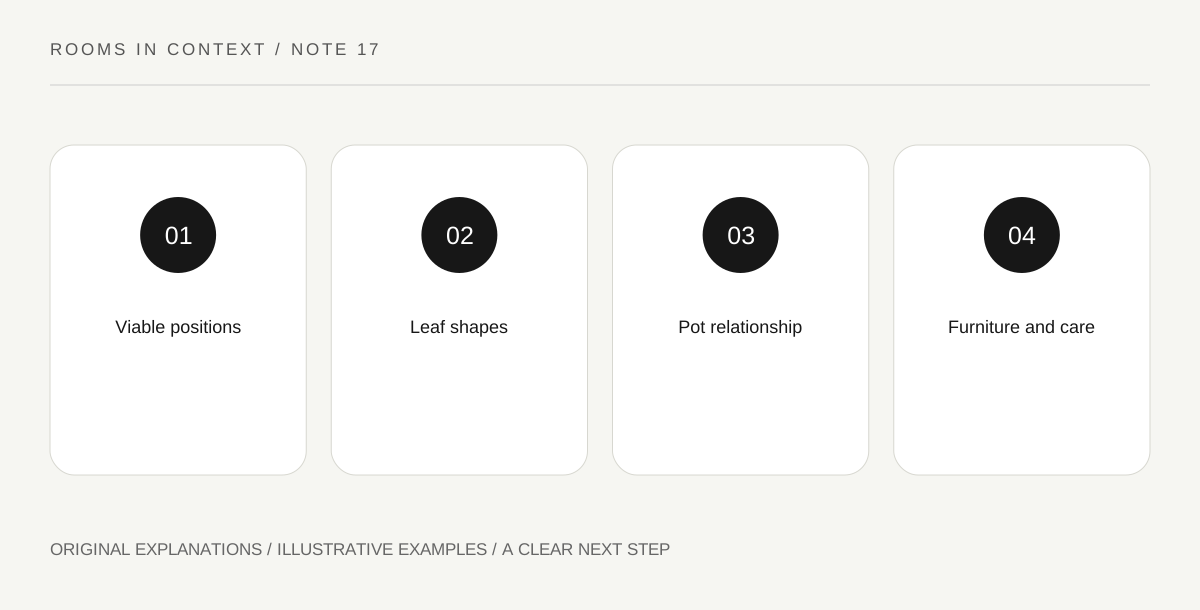
Original explanatory diagram. Read the full method and limitations below.
Establish suitable plant positions first
Use appropriate plant-specific care information to identify viable light and environmental conditions. This decorating exercise does not diagnose plants or promise that a dark corner will support any species. Mark the positions that genuinely work before arranging a visual composition. Household needs, pets and children may add further suitability questions. A beautiful grouping is not useful if the chosen location or plant is inappropriate for the actual home.
Compare the plants' visible forms
A tall narrow outline, a broad leaf and a trailing form create different shapes. Describe what the actual plants contribute rather than treating every green object as equivalent. One large leaf shape may have more visual presence than several small pots. View the grouping from the room entrance and seated positions. The spaces between plants can help the forms remain legible instead of merging into a single dense mass.
Choose pot relationships deliberately
Pots can share a material family, a value range or a simple shape while remaining different sizes. You do not need identical containers if that would compromise the plants' proper growing arrangements. Keep drainage and surface protection appropriate to the actual setup. For the visual study, compare a coherent group of quiet pots with a more varied set. The useful question is whether the pots should lead, support or provide contrast to the foliage.
Connect the grouping to furniture
A plant group can relate to a shelf edge, chair outline or existing green textile. It should not block access, conceal a problem or occupy a surface needed for another task. Keep watering and ordinary care manageable. Review the room with the real maintenance supplies and routines in mind, then record the viable positions, chosen shapes and pot relationship. This creates a plant-rich composition that remains connected to the living things and people using the room.
Illustrative worked example
Illustrative room: After checking suitable care conditions, a reader places one tall plant and one broad-leaved plant near a viable window area. Quiet pale pots let the foliage lead. She compares a trailing plant over a frequently used chair and rejects that position because it interferes with ordinary access. The final room has fewer plants than the first mood board, but clearer shapes and a care arrangement the household can manage.
Questions that come up
Does a plant-rich style require tropical species?
No. Choose plants appropriate to the actual conditions and household. The composition can come from varied shapes without imitating one climate.
Can decorative pots replace proper growing arrangements?
No. Visual coordination should not override plant-specific drainage and care needs or protection of the surrounding surface.
References and scope
These sources support the factual background. Examples and exercises are original illustrative teaching material. References do not imply endorsement.
- V&A Furniture collection — Primary reference objects for studying furniture forms, construction and material relationships.