Make a monochrome kitchen through materials rather than empty counters
A monochrome kitchen can contain ordinary tools and still feel visually coherent. The useful work is to choose which materials and value changes repeat, then include the objects you actually use. An empty photograph is not the only possible expression of a restrained kitchen style.
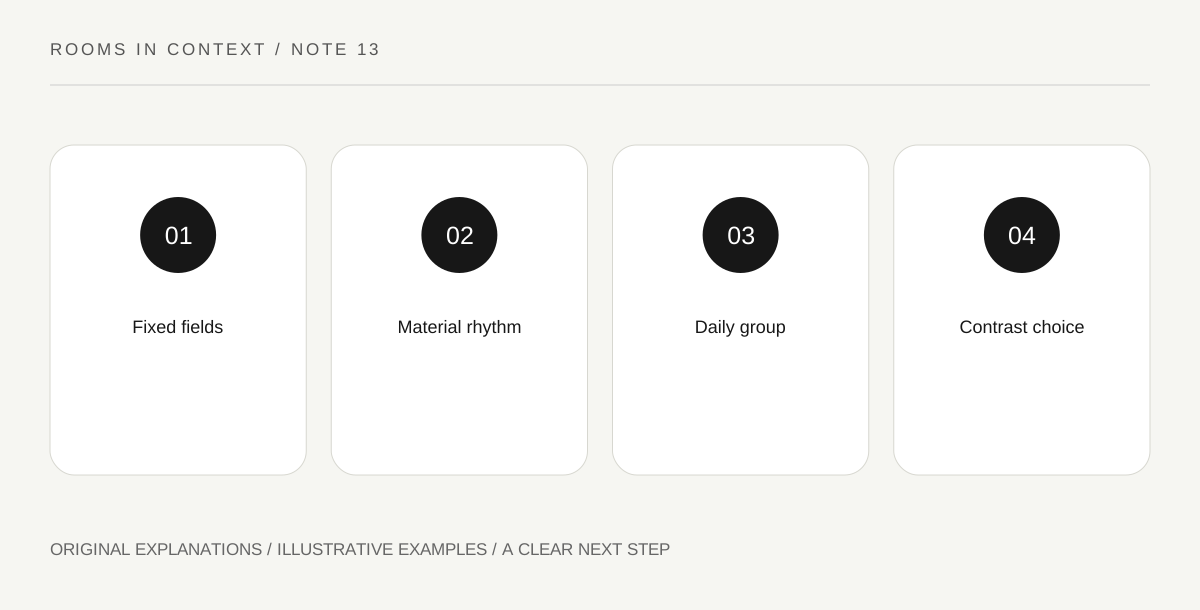
Original explanatory diagram. Read the full method and limitations below.
Map the fixed light and dark areas
Observe cabinet fronts, worktop, floor and appliances as broad fields. Monochrome does not require every surface to be exactly the same shade. A pale cabinet beside a dark appliance already creates a value relationship. Draw these areas before choosing smaller objects. The sketch helps show whether the room’s main structure is continuous or divided into several contrasting blocks, which can guide the scale of later additions.
Choose a limited material rhythm
A matte ceramic, smooth metal or visible wood object can introduce texture within the restrained palette. Decide which materials should repeat and which can remain a single contrast. You do not need to replace every useful appliance because its surface differs slightly. Look for relationships among the objects that already exist. A clear repeated material can provide continuity even when the kitchen contains several necessary shapes and finishes.
Give daily objects a visible composition
Place the kettle, utensil container or other regularly used items where they belong for actual use, while respecting applicable heat, access and appliance requirements. Then judge the view. A small group may read as one area, while scattered items create a different rhythm. The exercise concerns visual grouping, not a universal organization system or a reason to move a necessary object into an inconvenient or unsafe position solely for a cleaner image.
Add contrast only where it helps
A dark tray or pale container can make a particular group more legible, but buying another boundary is not always necessary. Compare the kitchen with and without the extra object. Keep surfaces maintainable according to their actual material information. The final note should identify broad fields, repeated material and the daily group that remains visible. This gives the monochrome idea a practical expression that can survive breakfast rather than disappear as soon as the room is used.
Illustrative worked example
Illustrative kitchen: Pale cabinets, a gray worktop and a dark kettle form the existing scheme. The reader groups two everyday items in one useful area and repeats a matte pale ceramic in a utensil holder. She compares a dark tray but decides the extra boundary is unnecessary. The kitchen retains its daily tools while the limited value range and material repetition create the restrained style she wanted.
Questions that come up
Must monochrome mean only pure black and white?
No. A restrained value family can include intermediate shades. The useful choice is how the actual surfaces relate, not a rigid two-color inventory.
Should I hide every useful appliance?
Only if that arrangement suits the appliance and your routine. Visual coherence can come from grouping and material relationships while necessary objects remain accessible.
References and scope
These sources support the factual background. Examples and exercises are original illustrative teaching material. References do not imply endorsement.
- V&A Furniture collection — Primary reference objects for studying furniture forms, construction and material relationships.
- V&A The sophisticated Modern home — Context for modern domestic objects and their functional and visual relationships.