Build a warm modern palette around orange-toned oak
Existing oak cabinetry or flooring can become the starting material for a modern room rather than a problem to cover. This study uses warm wood, quiet planes and a few precise contrasts. The goal is an intentional relationship with the wood that is actually present.
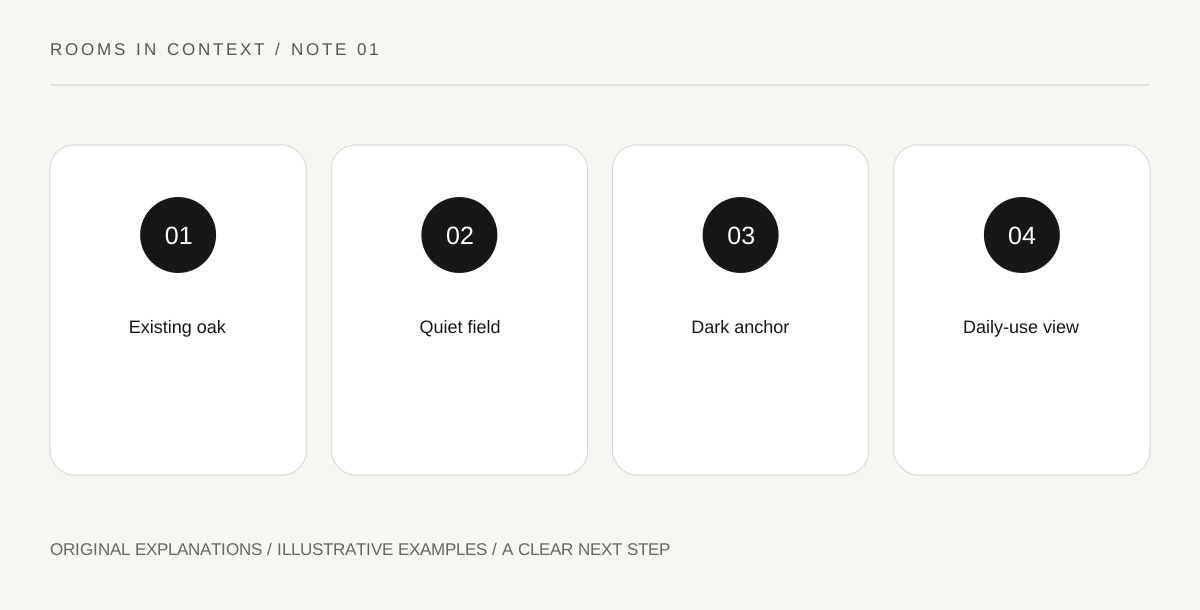
Original explanatory diagram. Read the full method and limitations below.
Observe the wood across the room
Look at the oak in morning and evening light and beside the surfaces that will remain. Describe its visible tone, grain and amount. A small honey-colored cabinet front plays a different role from an entire floor of similar wood. Do not choose a wall sample from the word oak alone. The existing material’s actual appearance gives you a more useful reference than a product category or a heavily edited inspiration photograph.
Choose one quiet surrounding field
A plain wall, simple curtain or broad upholstered surface can give the grain room to remain visible. Compare a warm pale sample with a cooler one in the actual room. You are not trying to prove that all warm wood requires one exact neutral. Choose the relationship you prefer: close and gentle, or more visibly contrasting. A modern reading can come from clear surfaces and deliberate edges without erasing the room’s older material.
Add a controlled darker element
A dark chair frame, lamp base or picture frame can introduce a repeated line beside the oak. Use one existing object first and observe its scale. Too many small dark accents may create more visual interruption than you wanted, while one substantial dark form may provide a clearer anchor. The useful decision concerns placement and area, not a universal rule that every warm room needs black hardware.
Check the palette with the things you use
Place ordinary dishes, books or textiles in the composition before judging it complete. A room that only works after every daily object disappears may not suit your routine. Keep the oak’s maintenance and any proposed finish changes separate from the color exercise. Do not sand, bleach or coat a fixed surface merely to test a palette. Start with samples and movable items, then make a material decision only with appropriate information and permission.
Illustrative worked example
Illustrative room: A kitchen has orange-toned oak doors that will remain. The reader compares two pale wall samples, keeps the warmer one and introduces a dark chair frame already owned. Cream ceramics supply a broad quiet surface on an open shelf. She checks the arrangement with the everyday kettle and dishes present, then records oak as the main material, pale wall as the field and dark chair as the structural accent.
Questions that come up
Must warm oak be painted to look modern?
No. Clear surrounding forms and deliberate material relationships can create a modern interpretation while the wood remains visible.
Should every new wood match the oak?
Not necessarily. Compare the actual pieces and decide whether their grain, tone and area create a relationship you enjoy rather than requiring an exact match.
References and scope
These sources support the factual background. Examples and exercises are original illustrative teaching material. References do not imply endorsement.
- V&A Furniture collection — Primary reference objects for studying furniture forms, construction and material relationships.
- V&A The sophisticated Modern home — Context for modern domestic objects and their functional and visual relationships.