Use terracotta flooring in a restrained Mediterranean-inspired room
Terracotta-colored flooring already contributes a strong warm field. A restrained Mediterranean-inspired interpretation can begin with that existing surface, then use light, simple forms and selected texture. This is an original decorating exercise rather than a claim that every Mediterranean home shares one palette.
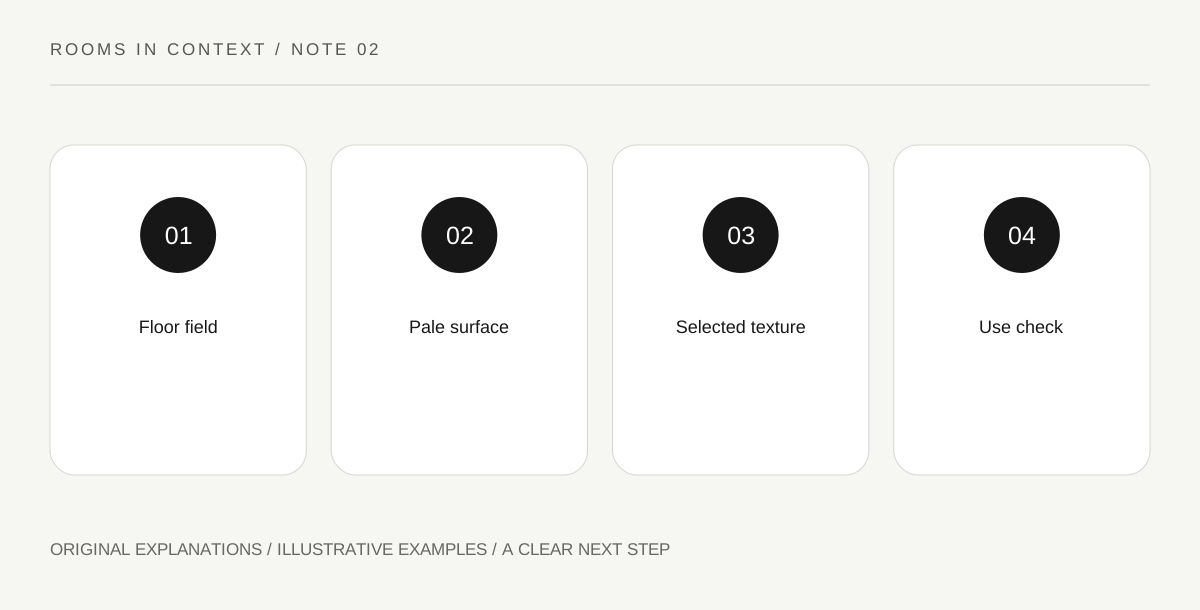
Original explanatory diagram. Read the full method and limitations below.
Name the floor’s actual qualities
Observe whether the floor reads as red, orange, brown or a varied mixture. Notice grout lines, tile size and the amount visible after furniture is placed. These are fixed visual facts in the room. An inspiration image with pale stone does not require your terracotta to disappear. Start by deciding how much of the floor you want to see, keeping circulation and the normal use of the room clear.
Choose a light field with an intentional undertone
Compare pale wall or textile samples directly beside the floor. A creamy sample may create a close warm relationship; a more neutral white may make the terracotta appear stronger. Neither is automatically more authentic. The point is to choose a field that lets you enjoy the floor rather than repeatedly buy smaller objects to distract from it. Test under the room’s actual light before committing to a large surface change.
Use texture without collecting every stereotype
A woven shade, plain linen-like textile or simple ceramic can provide tactile variation. Choose one or two that work for your actual household. You do not need an arch motif, blue pottery, baskets and faux-aged furniture all at once. Describe the selected texture’s job: a soft vertical surface, a quiet tabletop object or a repeated natural-looking line. Specific roles keep the room from becoming a themed display of unrelated references.
Keep the composition comfortable and maintainable
Check the furniture’s behavior on the existing floor and use suitable protection according to the objects and surface. If you introduce a rug, consider its actual placement, care and stability rather than using it solely as a color patch. Structural arches, plaster effects and changes to fixed finishes are separate projects requiring appropriate assessment. A decorative interpretation can begin with movable objects and samples while those larger questions remain undecided.
Illustrative worked example
Illustrative scheme: A dining room has varied terracotta tiles and a plain existing table. The reader chooses warm pale curtains, a simple dark chair frame and one large cream ceramic bowl. She leaves much of the tile visible and avoids adding several decorative arch shapes. Her note describes a warm floor, quiet vertical field and one textured object, making the reference usable without claiming the room reproduces a particular region’s domestic tradition.
Questions that come up
Does Mediterranean-inspired always mean blue and white?
No. That is one familiar association, not a complete description of the region’s varied interiors. Use a specific reference and the materials in your own room.
Must I cover strong terracotta with a rug?
No. You can let the floor lead. A rug should serve the room’s practical and visual needs rather than automatically conceal an existing material.
References and scope
These sources support the factual background. Examples and exercises are original illustrative teaching material. References do not imply endorsement.
- V&A Furniture collection — Primary reference objects for studying furniture forms, construction and material relationships.