Use a Scandinavian-inspired palette with cool gray flooring
A cool gray floor can remain part of a light, restrained room without forcing every other surface to become gray. This exercise uses a Scandinavian-inspired reference as a preference for clear forms and selected texture, while avoiding the claim that a whole region has one universal beige style.
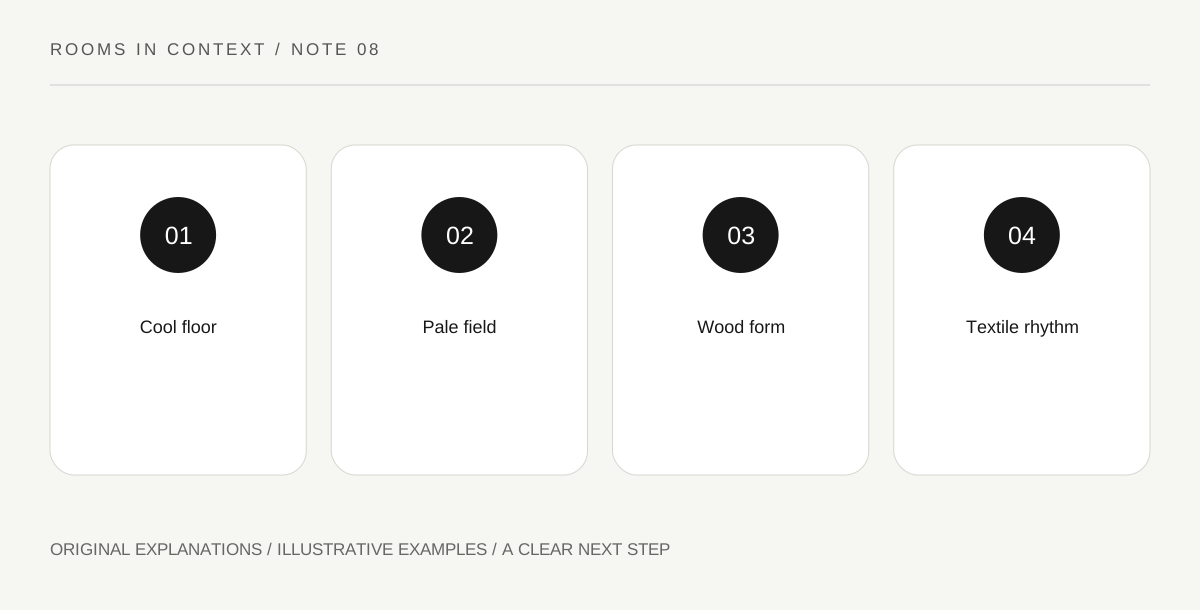
Original explanatory diagram. Read the full method and limitations below.
Read the floor alongside fixed neighbors
Observe the gray beside wall color, doors and any existing wood. Some gray floors look bluish, others more neutral or brown, and the room’s light can change that impression. Make a note from the actual surface rather than a retailer’s color name. The amount of exposed floor matters too. A small entry strip and a broad living-room field contribute different visual weight to the same palette.
Choose a pale field that belongs beside it
Compare two or three existing or sample textiles directly against the floor. One might create a cooler continuous relationship; another might introduce a warmer contrast. Keep the sample large enough to see its effect at ordinary distance. The exercise does not seek the one neutral that fixes gray. It asks which surrounding field makes the room feel intentional to you while respecting the materials that will remain.
Introduce wood through shape and area
A chair, table or shelf can bring another material without matching the floor. Compare the actual wood’s grain, color and visible amount. One clear timber form may be more legible than several tiny wood-colored accessories. Choose a useful object that fits the room rather than purchasing texture for its own sake. The style reference can come from material relationships and simple forms without requiring a collection of nationally labeled products.
Let one textile provide the softer rhythm
A plain woven curtain, blanket or upholstered surface can alter the visual texture. Select the item for actual use and care as well as appearance. If the room needs acoustic or thermal performance, obtain appropriate product information instead of inferring a measurable result from softness alone. Review the palette with ordinary objects present and note the floor, pale field, wood form and textile role as four distinct parts of the room.
Illustrative worked example
Illustrative scheme: A rental lounge has cool gray flooring, white walls and an existing oak chair. The reader compares a gray throw with an oatmeal one and prefers the warmer contrast. A plain pale curtain gives a broad quiet surface, while the chair remains the main timber form. She keeps daily books visible and records the material relationship without describing the room as an authentic representation of all Scandinavian interiors.
Questions that come up
Must gray flooring be covered completely?
No. It can remain a deliberate field. Choose a rug only if its practical and visual role suits the actual room.
Does Scandinavian-inspired mean every item must be pale wood?
No. A specific reference can guide forms and material relationships without prescribing the origin or color of every object.
References and scope
These sources support the factual background. Examples and exercises are original illustrative teaching material. References do not imply endorsement.
- V&A Furniture collection — Primary reference objects for studying furniture forms, construction and material relationships.
- V&A The sophisticated Modern home — Context for modern domestic objects and their functional and visual relationships.