Let dark wood paneling support a contemporary room
Dark paneling creates a large continuous surface with its own rhythm. A contemporary room can work with that rhythm instead of surrounding it with small decorative corrections. Begin by deciding whether the paneling should be the main field or a strong background behind a few clearer forms.
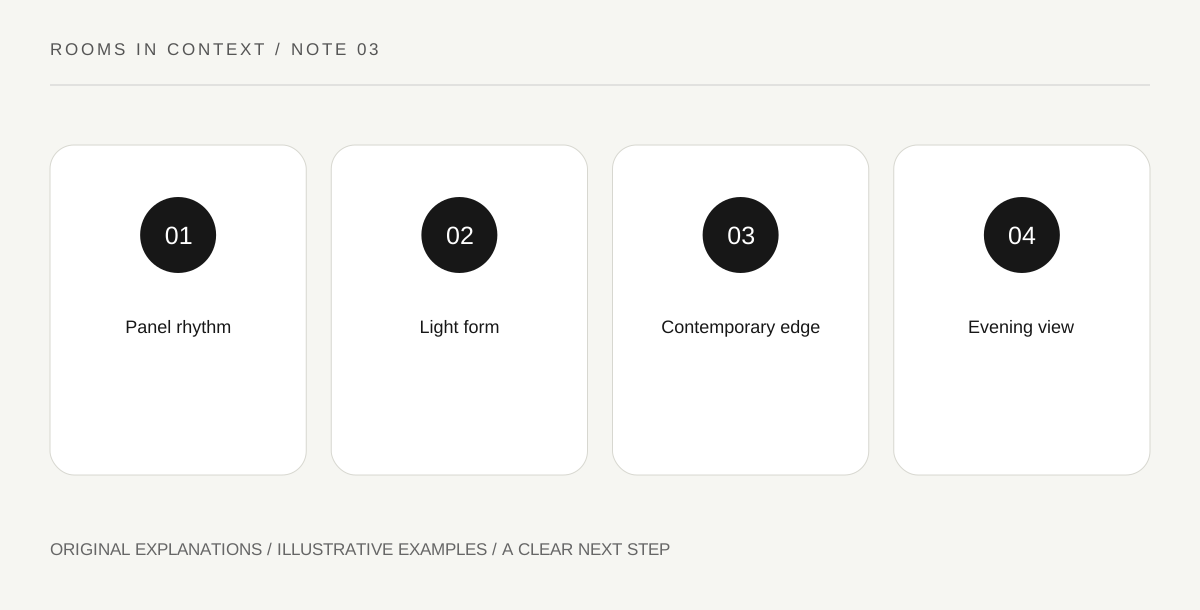
Original explanatory diagram. Read the full method and limitations below.
Observe the panel rhythm
Look at the width of panels, the spacing of divisions and any molding. A simple vertical pattern differs from a wall with elaborate framed sections. Name the actual lines before selecting new furniture. The paneling’s darkness is only one part of its appearance; repetition and texture also matter. A room can feel visually busy because of many small divisions even when its colors remain restrained. Sketch those panel divisions before placing another grid nearby.
Give one light form enough presence
A pale sofa, broad curtain or large artwork can create a clear contrasting area. Compare one substantial light element with several small pale accessories. The large form may establish a more legible relationship with the paneling, while scattered objects may produce a different rhythm. This is a choice to assess in the room, not a rule that large dark walls must always be balanced by a particular percentage of white.
Use furniture edges to change the reading
A clean-lined table or simple chair can introduce a contemporary form beside traditional-looking panel divisions. Avoid assuming that every piece must belong to the paneling’s period. You can retain the wall’s character while choosing a different furniture language. Look at where legs, arms and top edges sit against the panel grid. A clear silhouette can be more useful than a fashionable material whose outline disappears into the background.
Evaluate the room in evening light
Dark surfaces and reflective objects can read differently after daylight fades. Use existing safe lighting arrangements to inspect the actual composition; decorative style planning does not require electrical alterations. Check whether the light form remains distinct and whether the panel rhythm still feels enjoyable. Keep any proposal to paint, strip or alter the wood separate until you understand the material, permissions and consequences. A reversible furniture study can resolve more than an immediate finish change.
Illustrative worked example
Illustrative living room: Dark paneled walls remain intact. The reader places a pale plain sofa against one wall and compares a collection of tiny pictures with one larger existing artwork. She prefers the larger image because its edge reads clearly against the panel grid. A simple table introduces another clean line. She reviews the arrangement after sunset before deciding whether any permanent surface change is necessary.
Questions that come up
Must contemporary furniture erase the paneling’s character?
No. Different design languages can coexist when their visible relationships are chosen deliberately.
Is painting the paneling the first step?
Not necessarily. Study light, furniture and scale first. Any permanent treatment depends on the actual material and appropriate permission or professional advice.
References and scope
These sources support the factual background. Examples and exercises are original illustrative teaching material. References do not imply endorsement.
- V&A Furniture collection — Primary reference objects for studying furniture forms, construction and material relationships.
- V&A The sophisticated Modern home — Context for modern domestic objects and their functional and visual relationships.