Give a postmodern color idea one contained alcove
An alcove can hold a playful color and shape experiment without requiring the whole room to adopt the same intensity. This study uses a contained area, a clear geometric relationship and a limited set of objects. The reference is an interpretation, not a claim of period authenticity.
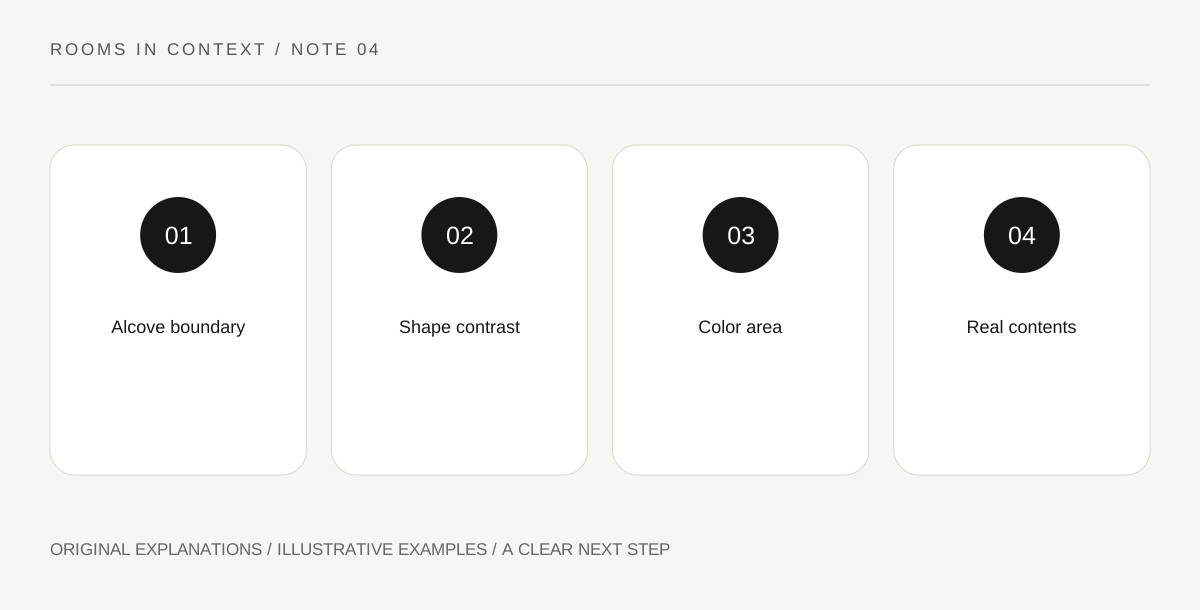
Original explanatory diagram. Read the full method and limitations below.
Define the boundary of the experiment
Use the alcove’s actual edges, shelf opening or furniture bay as the visible container. Draw that boundary on a simple room sketch. Decide which surrounding surfaces will remain quieter. The purpose is to make the playful area legible, not to declare that color must be confined. A small contained study helps you understand the effect before making a room-wide decision you may not want.
Choose one shape relationship
Try a curved object against a rectangular opening, a stepped form beside a circle or another clear contrast. Use objects already available or paper shapes for the first study. The relationship should remain recognizable from the room’s usual viewing position. Tiny decorative details may disappear at that distance. You do not need several novelty objects if one strong form already gives the alcove the lively character you intended.
Assign colors by area
Choose a main color field and one smaller contrasting area rather than treating every object as a new color opportunity. A pink backing with a blue curved vase creates a different arrangement from blue backing with a small pink object. Compare those distributions in a sketch or with removable samples appropriate to the surface. The color names alone do not explain the composition; the amount and position of each color matter.
Let ordinary use test the idea
If the alcove stores books or a speaker, include those items while reviewing the scheme. Avoid designing a display that only works when the functional contents are hidden elsewhere. Any paint, fastening or shelf alteration requires the relevant surface information and permission. A movable tray, freestanding object or paper mock-up can test the visual idea first. Record the boundary, main shape and color distribution so the experiment remains clear rather than becoming an expanding collection of unrelated bright objects.
Illustrative worked example
Illustrative alcove: A shallow living-room opening contains a small speaker and books. The reader sketches a pale pink backing and one blue curved object, leaving the speaker visible rather than pretending the alcove is empty. She compares a second colorful vase and decides it weakens the first shape’s role. The final note describes one contained field, one strong curve and the real functional contents that the composition must accommodate.
Questions that come up
Does playful style require many unusual objects?
No. One strong shape or color contrast can carry the idea. Add more only if you prefer the resulting relationship.
Can the rest of the room remain quiet?
Yes. A contained area can provide contrast within a calmer room. The boundary helps explain why the two intensities coexist.
References and scope
These sources support the factual background. Examples and exercises are original illustrative teaching material. References do not imply endorsement.
- V&A Furniture collection — Primary reference objects for studying furniture forms, construction and material relationships.
- V&A The sophisticated Modern home — Context for modern domestic objects and their functional and visual relationships.