Translate an Art Deco reference into a low-ceiling bedroom
A low ceiling does not prevent a room from using an Art Deco reference, but it changes which forms can be comfortably accommodated. This study concentrates the reference in furniture edges, a repeated motif and selected surfaces rather than adding oversized decorative architecture.
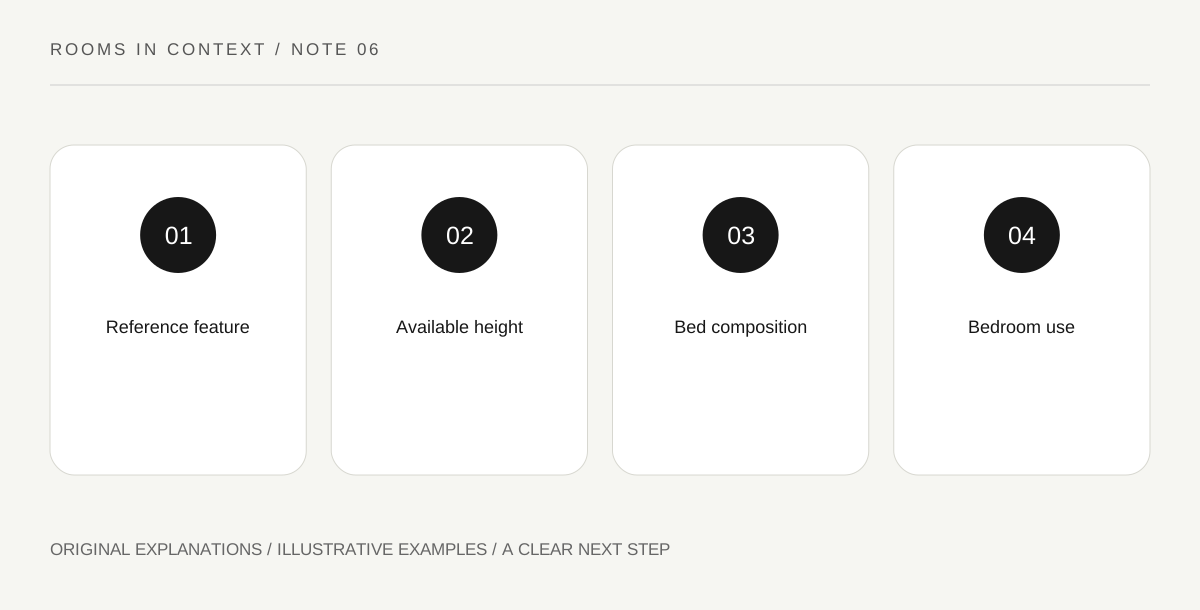
Original explanatory diagram. Read the full method and limitations below.
Choose a specific reference feature
Look at a primary museum object and identify one feature: a stepped outline, a curved front, a geometric textile or a reflective surface. Art Deco domestic design included varied materials and objects, so a generic gold-and-black checklist is too narrow. Write the actual feature you want to translate. The bedroom can borrow that relationship without claiming to reproduce a complete historic interior or requiring every object to look as though it came from one decade.
Keep the upper room visually legible
Observe where the ceiling meets walls, furniture and window treatments. A tall crowded headboard composition may feel different from a clear lower furniture line. Sketch the visible height of the bed, headboard and any artwork before buying. The purpose is to see the available field, not to promise that one arrangement will make the ceiling physically higher. Choose a composition that you enjoy within the actual room proportions.
Concentrate the reference near the bed
A repeated stepped shape in a small object or a clear geometric textile can establish the idea without a large structural change. Compare one strong motif with several competing ones. If the headboard already has a distinctive curve, a quieter bedside surface may make it easier to read. Use reflective finishes selectively and inspect what they reflect, because a glossy object can introduce bright patches as well as the shape you intended.
Check the room as a bedroom
Leave convenient access to the bed and the things you use at night. Decorative objects should not occupy a bedside surface needed for ordinary essentials. Any mounting or lighting changes need appropriate installation and permissions. Begin with a textile or movable object study. A useful plan records the reference feature, its location and the practical space retained, making the style a part of the room’s function rather than a separate display that competes with it.
Illustrative worked example
Illustrative scheme: A bedroom has a low ceiling and a simple bed. The reader chooses a stepped geometric cushion pattern and a small curved bedside object as the Art Deco references. She compares a large decorative wall arrangement with one quieter picture and prefers the latter. The final sketch keeps the bed area accessible and leaves the upper wall less crowded, without claiming that the ceiling has been visually corrected for every viewer.
Questions that come up
Does Art Deco require gold everywhere?
No. The primary domestic objects show a broader range of materials and forms. Choose a specific reference instead of relying on one metallic stereotype.
Will low furniture guarantee a taller-looking room?
No. Perception depends on the complete room. Use a sketch and actual samples to choose a relationship you prefer rather than treating one trick as a guarantee.
References and scope
These sources support the factual background. Examples and exercises are original illustrative teaching material. References do not imply endorsement.
- V&A Art Deco in the home — Historical context for Art Deco domestic materials and forms.