Give a sculptural Space-Age chair an ordinary living-room role
A sculptural chair can remain a distinctive object without turning a room into a futuristic set. Begin with its actual form, a useful seating purpose and the space around it. Museum references help you look closely, while the final room remains your own contemporary interpretation.
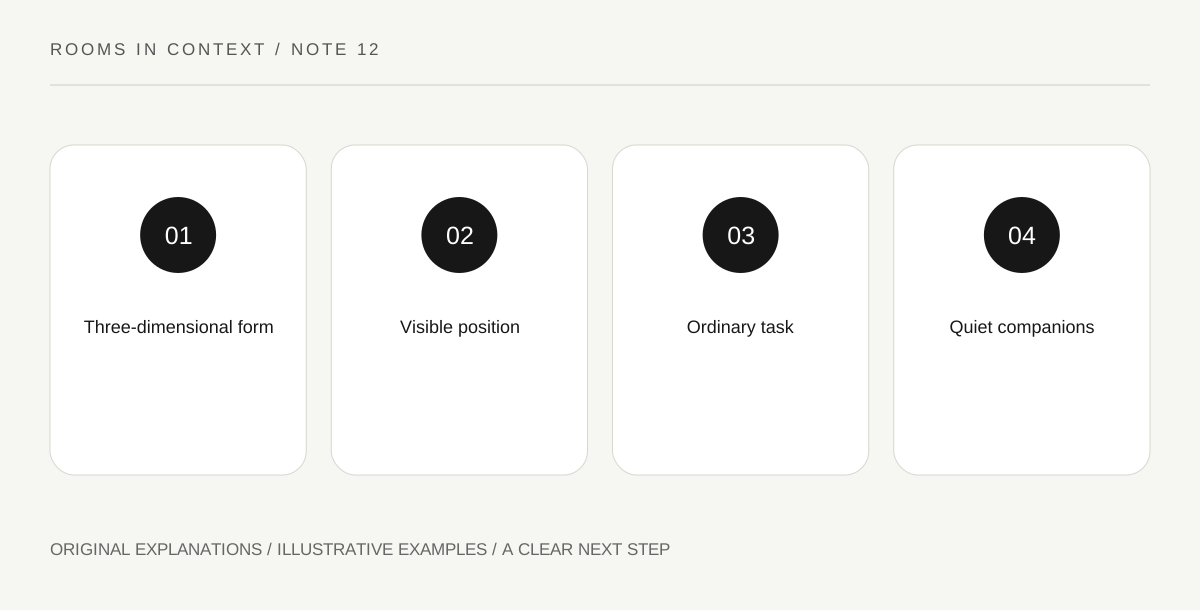
Original explanatory diagram. Read the full method and limitations below.
Read the chair as a three-dimensional object
Look at the side, back and seat rather than only its most recognizable front view. A shell-like form, continuous curve or enclosed seat creates a different presence in the room. The V&A’s Space-Age chair examples show varied experiments, so avoid treating the label as one identical silhouette. If your chair resembles a historic object, do not infer an attribution or authenticity without appropriate evidence.
Choose where the shape can be seen
A chair placed tightly among other bulky furniture may lose the outline you enjoyed in a product image. Compare positions from the doorway and main seat, keeping access clear. Empty space around a form can help its edge remain legible, but the amount depends on the room. The goal is not to isolate an unusable sculpture. Choose a position where the chair’s design and practical role can coexist.
Give it an ordinary task
The chair might serve reading, conversation or a brief place to sit while putting on shoes, provided its actual comfort and condition suit that use. Try the object appropriately rather than assuming a striking shape is comfortable for every activity. A nearby useful table or light can connect it to the room’s routine. This practical relationship keeps the chair from becoming a decorative purchase that occupies space without serving anyone.
Let other furniture be quieter if you prefer
A simple sofa or table can give the sculptural chair a clear role. You can repeat one curve or color, but a full collection of futuristic-looking objects is optional. Review the room with daily contents included. Record the chair’s visible outline, the useful task and one connection to the surrounding furniture. That explanation preserves its character without requiring the room to become a literal reconstruction of a historical vision of the future.
Illustrative worked example
Illustrative room: A reader owns a rounded shell-style chair that she enjoys for short reading sessions. She places it where its side curve can be seen from the entrance and pairs it with a simple existing table. She compares a second sculptural lamp with a plain one, choosing the plain version so the chair remains the main form. The room keeps its everyday sofa and books rather than adopting a complete space-themed scheme.
Questions that come up
Does Space-Age-inspired mean the chair is an original period piece?
No. Inspiration and attribution are different claims. Use appropriate documentation before assigning a maker, date or collectible status.
Must every surrounding object look futuristic?
No. Quieter everyday pieces can provide a useful setting for one sculptural form. A literal theme is a preference, not a requirement.
References and scope
These sources support the factual background. Examples and exercises are original illustrative teaching material. References do not imply endorsement.
- V&A Space-Age chairs — Primary museum examples of sculptural Space-Age seating.
- V&A Furniture collection — Primary reference objects for studying furniture forms, construction and material relationships.