Let a decorative fireplace coexist with a quiet modern room
An existing decorative fireplace can remain the most detailed object in a room while contemporary furniture supplies simpler surrounding forms. Begin with its actual outline and material. This study concerns visual composition around the feature, not fireplace operation, alteration or safety assessment.
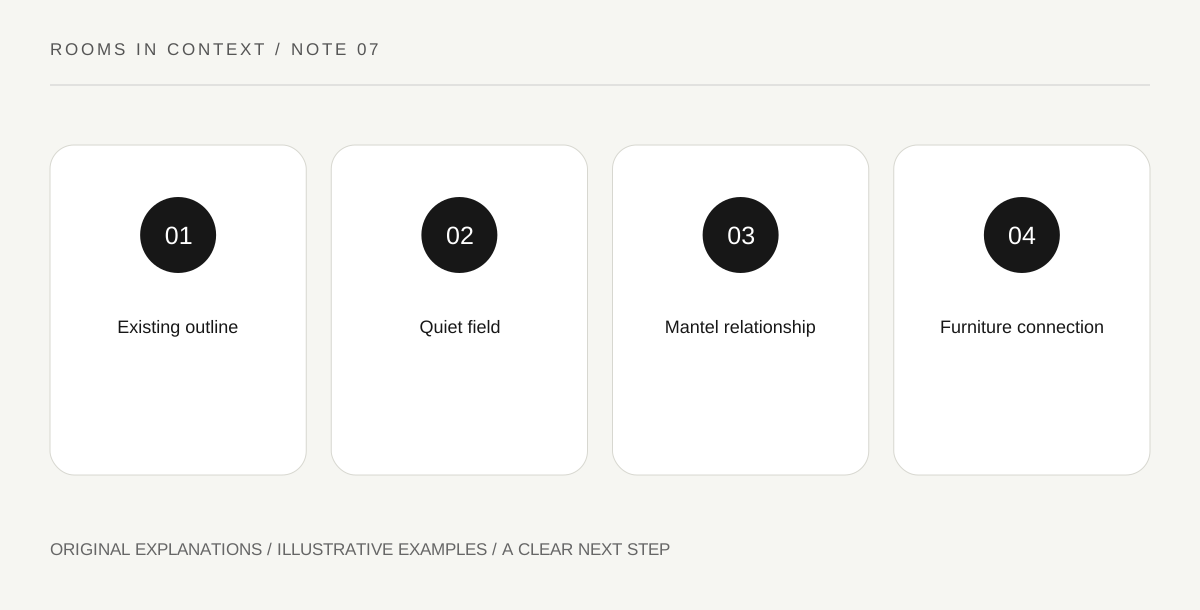
Original explanatory diagram. Read the full method and limitations below.
Observe the feature without assigning an unproven date
Look at the surround, mantel, opening and repeated decorative elements. A floral motif, tiled panel or heavy horizontal shelf gives different visual information. Do not identify a period or maker solely because the feature resembles an online photograph. For the composition exercise, an accurate description of the visible lines is enough. Any material conservation or functional question belongs to appropriate specialist assessment rather than a styling experiment.
Give the fireplace a clear surrounding field
A quiet wall and a plain nearby furniture form can leave its detail legible. Compare this with several small objects distributed around the surround. You may enjoy the denser arrangement, but observe whether the fireplace itself remains the feature you wanted to emphasize. The goal is not automatically to remove ornament. It is to decide which details lead and which surrounding surfaces make that choice visible.
Choose mantel objects by relationship
If the mantel is suitable for the intended objects, compare one substantial shape with a collection of small unrelated ones. Consider the outline from the room’s ordinary viewing positions. A curved vessel may echo the surround, while a rectangular picture can contrast with it. Stability, weight and applicable fireplace clearances require appropriate attention; the visual idea does not override the feature’s real use or the objects' safe placement requirements.
Connect the modern furniture through one element
A dark chair frame might repeat the opening’s color, or a pale sofa might relate to the surround. One connection can be enough. You do not need replicas of period furniture to keep the fireplace from looking isolated. Review the room with its actual daily contents present. Record the connection you chose and what remains intentionally different, so the mix reads as a relationship between objects rather than an unfinished attempt to make every era match. A repeated dark edge can connect objects without repeating their ornament.
Illustrative worked example
Illustrative living room: A decorative surround has a strong dark opening and a detailed pale frame. The reader pairs it with a plain sofa and repeats the dark tone in one contemporary chair. She compares several small mantel objects with one larger existing picture, keeping the latter after checking appropriate placement. The room retains the fireplace’s ornament while the newer furniture contributes simpler edges and everyday seating comfort.
Questions that come up
Must new furniture match the fireplace’s apparent period?
No. A chosen material or line can connect different objects while their forms remain distinct.
Can decorating advice establish fireplace clearances?
No. Operating condition, clearances and installation questions require the relevant professional and product guidance. This study addresses composition only.
References and scope
These sources support the factual background. Examples and exercises are original illustrative teaching material. References do not imply endorsement.
- V&A Furniture collection — Primary reference objects for studying furniture forms, construction and material relationships.
- V&A The sophisticated Modern home — Context for modern domestic objects and their functional and visual relationships.