Set a chrome-framed piece beside a green sofa
Chrome-colored furniture and a green upholstered sofa can create a contrast between a reflective line and a broad soft field. Study that relationship before adding more metallic objects. The useful result is a room where the two materials have clear roles under the light you actually use.
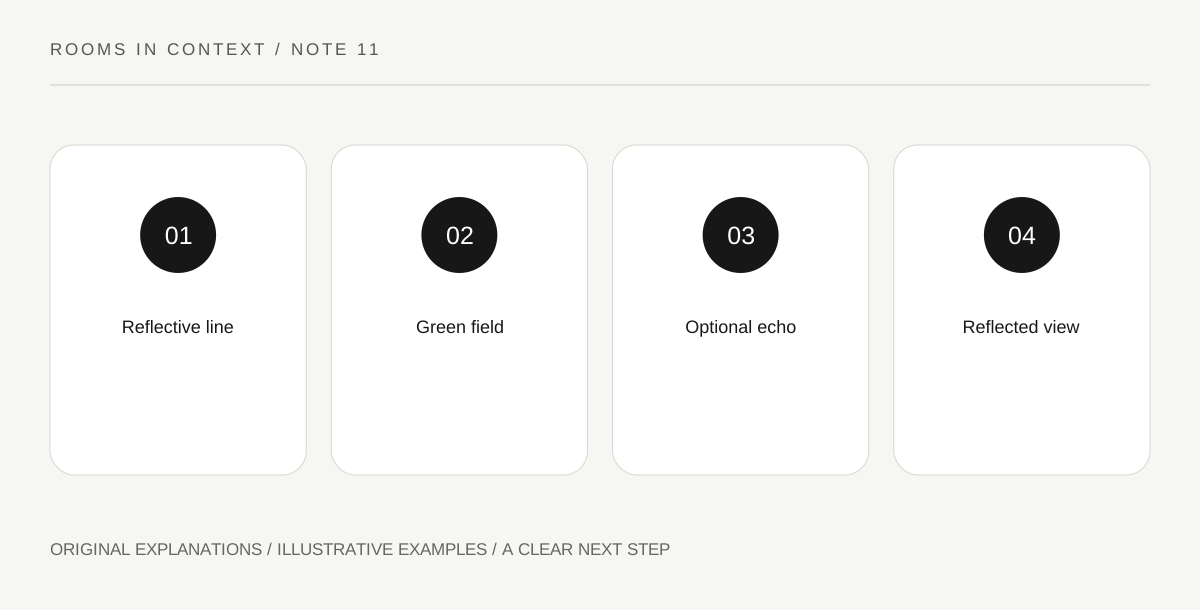
Original explanatory diagram. Read the full method and limitations below.
Describe the reflective object accurately
A slender metal chair frame, a broad table base and a polished storage front contribute very different amounts of reflection. Identify the actual outline and visible area. A chrome-colored appearance does not establish the material composition or care method, so use product information for those questions. For the composition exercise, note whether the object reads mainly as a thin line, a bright plane or a repeated set of highlights.
Let the sofa establish the broad field
Look at the green upholstery in daylight and evening light. A deep muted green can behave differently from a bright yellow-green even when both are called green. The sofa’s size and surface texture matter alongside hue. Place the reflective object where its outline remains legible against the sofa or another surface. You are choosing a relationship between actual objects rather than assuming that a fashionable color automatically suits every metal finish.
Choose one repeated connection
A small reflective detail elsewhere can echo the frame if you enjoy the link. Alternatively, the chrome-colored object can remain a single contrast. Compare the room before adding a second metallic piece. Repetition should serve the composition rather than turn every handle, lamp and picture frame into a matching obligation. A dark or pale companion may provide a quieter field that makes the original reflective line easier to see.
Inspect reflections and ordinary use
View the piece from the sofa and the entrance, then after sunset. Notice what the surface reflects and whether those highlights are enjoyable or distracting. Keep the object useful for its actual purpose: a table needs appropriate stability and clearance, while a chair needs suitable comfort and condition. Do not alter a coating or apply a cleaning treatment based only on its color. Record the reflection relationship separately from material care so both decisions remain clear.
Illustrative worked example
Illustrative lounge: A deep green sofa sits beside a slender chrome-colored table frame. The reader compares a large metallic lamp with a plain dark one and prefers the dark lamp because the table remains the main reflective line. She checks the view from the sofa at night and notices which objects appear in the table’s reflections. Her final note describes broad green upholstery, one bright frame and a quieter surrounding field.
Questions that come up
Must every metal in the room match?
No. A repeated finish is one option, not a requirement. Concentrate on visible relationships rather than hidden or minor hardware.
Does chrome-colored mean easy care?
No. Appearance does not establish the finish or permitted cleaning method. Use the actual object information and suitable guidance for maintenance.
References and scope
These sources support the factual background. Examples and exercises are original illustrative teaching material. References do not imply endorsement.
- V&A Furniture collection — Primary reference objects for studying furniture forms, construction and material relationships.
- V&A Art Deco in the home — Historical context for Art Deco domestic materials and forms.