Pair bentwood dining chairs with a contemporary table
A bentwood chair brings a recognizable curved line to a dining area. A contemporary table can sit beside it without imitating the same curve. Begin with construction and silhouette as visual references, then check the practical chair-and-table relationship that makes the combination usable.
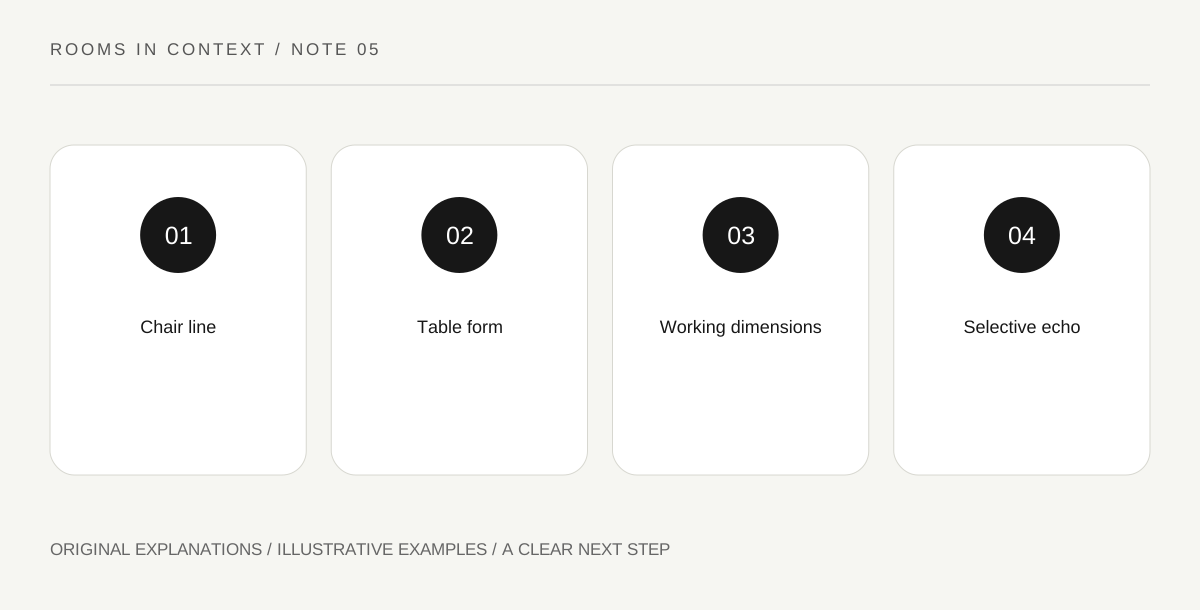
Original explanatory diagram. Read the full method and limitations below.
Observe the chair’s actual line
Look at the back, legs and connections rather than calling every curved chair the same design. Bentwood furniture has a specific construction history, explored in the V&A’s primary collection material, but your chair still needs its own identification. Do not assign a maker or age from a resemblance alone. For the room study, describe the visible curve, surface and amount of open space within the back.
Choose whether the table echoes or contrasts
A rounded tabletop can continue the chair’s curve; a plain rectangular top can place a firmer edge beside it. Compare actual objects or accurate dimensions rather than choosing from isolated photographs. The table’s base matters too. A visually light top on a bulky base may create a different relationship from the one suggested by the tabletop shape alone. View the full pair from the room entrance and from a seated position.
Check the working dimensions
Confirm that the chair can approach the table comfortably and that arms, back or legs do not interfere with the intended use. Measure the actual pairing if needed. A beautiful silhouette does not establish useful legroom or the ability to pull out a chair. Keep ordinary movement clear. This is a furniture-use check, not a structural certification or a reason to modify a chair’s construction without appropriate expertise.
Repeat a curve selectively elsewhere
One rounded bowl or curved lamp can echo the chair line if you enjoy the connection. Adding many curved objects may create a more literal theme than you wanted. Compare the room before and after the extra object. The bentwood chairs can remain the distinctive repeated element while the table supplies a quiet plane. Record the useful relationship in plain words so a future replacement does not depend on finding an exact visual copy.
Illustrative worked example
Illustrative dining area: Four curved-back chairs surround a simple rectangular table with a quiet dark base. The reader likes the contrast between open chair backs and the solid table plane. She checks approach space and seated comfort, then tries one round ceramic bowl. She keeps it because it repeats the curve without turning every object in the room into a matching motif. No maker or antique status is inferred from the chairs' appearance.
Questions that come up
Must bentwood chairs accompany an antique table?
No. A contemporary table can create a useful contrast. Judge the actual shapes, dimensions and use together.
Does a curved wooden chair prove a famous maker?
No. Identification requires appropriate evidence. A visual resemblance is enough for a composition exercise but not for an attribution or value claim.
References and scope
These sources support the factual background. Examples and exercises are original illustrative teaching material. References do not imply endorsement.
- V&A Thonet and bentwood furniture — Bentwood construction history and chair forms.
- V&A Furniture collection — Primary reference objects for studying furniture forms, construction and material relationships.