Use one Arts and Crafts textile in a contemporary reading room
A detailed textile can bring an Arts and Crafts reference into a room with contemporary furniture. The useful move is to understand the pattern’s structure and give it a clear role. A reading room can hold books, practical light and the textile without becoming a period set.
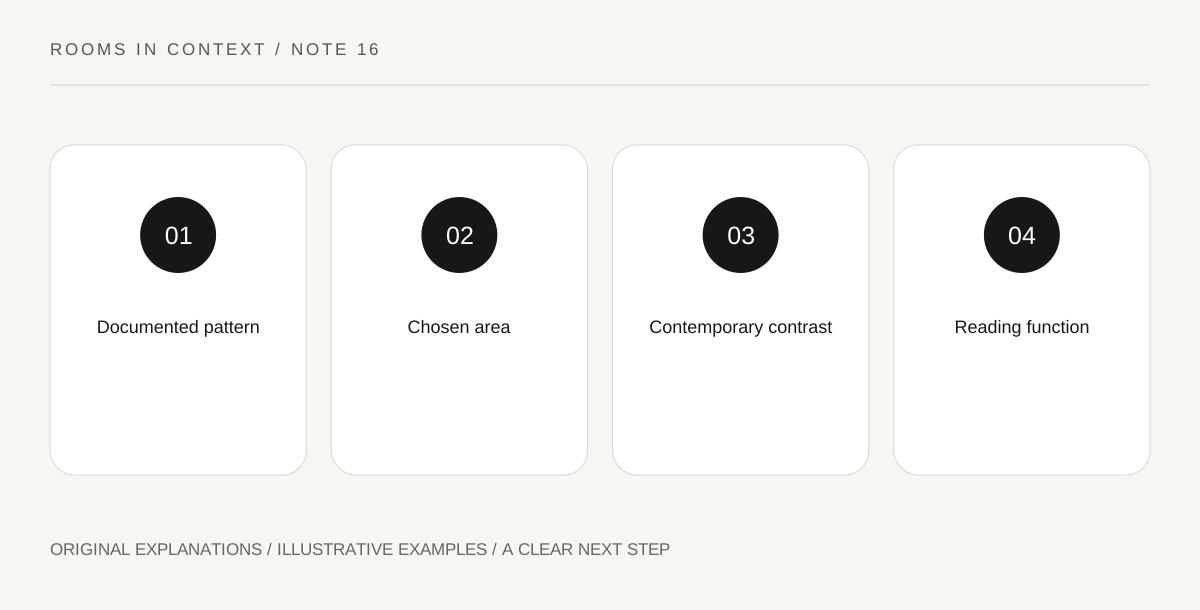
Original explanatory diagram. Read the full method and limitations below.
Choose the reference with accurate context
The Arts and Crafts movement concerned making, materials and design as well as decorative pattern. Use a primary museum reference to identify the textile’s documented context, while keeping any new reproduction clearly distinguished from an original object. For the room study, note the pattern’s visible rhythm: repeated stems, dense foliage or a clear geometric arrangement. Do not reduce the whole movement to any floral print that happens to look old-fashioned.
Give the textile a defined area
A cushion, chair upholstery or curtain creates a different amount of pattern. Choose the area that fits the actual room and object. A small cushion may provide a concentrated detail; a large curtain becomes a major field. Compare a mock-up at the intended size before buying more. The textile should remain legible from the chair where you read, not only in a close photograph of the pattern. Note the scale of the motif as well as its color.
Let contemporary furniture supply another language
A plain shelf or clean-lined chair can sit beside the detailed textile without pretending to be historical. One shared color or material can connect them. The difference between simple form and dense pattern may be the relationship you enjoy. Avoid adding replica-looking objects merely to explain the textile’s presence. A specific reference can be enough, particularly when the room already has books and other visual information.
Protect the room’s reading function
Keep the seat comfortable and the reading materials accessible. Appropriate lighting and any installation need their own practical assessment; a style reference does not establish useful illumination. Follow the textile and furnishing care information. Review the room with current books and ordinary reading items present. Record the textile area, the contemporary form beside it and the one connection between them, so the room remains a lived space rather than a display that only works when unused.
Illustrative worked example
Illustrative reading corner: A contemporary plain chair receives one cushion with a documented Arts and Crafts-inspired pattern. A dark green from the textile relates to an existing shelf detail, while the rest of the chair remains quiet. The reader compares a matching curtain and decides it would create more pattern than wanted. She keeps the cushion, useful reading light and accessible books as the complete arrangement.
Questions that come up
Must the whole room use period furniture?
No. A contemporary form can provide a deliberate contrast to a historical textile reference.
Does a reproduction become an antique because its pattern is old?
No. Pattern history and the age of the actual object are different facts. Describe reproductions accurately rather than implying an unsupported provenance.
References and scope
These sources support the factual background. Examples and exercises are original illustrative teaching material. References do not imply endorsement.
- V&A Arts and Crafts introduction — Historical context for material, making and pattern in Arts and Crafts.
- V&A Furniture collection — Primary reference objects for studying furniture forms, construction and material relationships.